What Comes After Plastic and Conventional Paper Packaging?
Z1RO is developing molded-fiber packaging from leaves, hemp, bamboo, flax and agricultural residues
Packaging is one of the hardest parts of the sustainability transition. It protects products, shapes the first physical experience with a brand, carries regulatory responsibility and often becomes waste within minutes or days after use.
Globally, packaging accounts for around 40% of plastic waste. In Europe, regulation is also moving fast: by 2030, all packaging placed on the EU market is expected to be recyclable in an economically viable way. For brands, this creates a clear challenge. Plastic needs to be reduced, but simply replacing it with conventional paper or virgin wood pulp does not solve the whole material question.
At Z1RO, we believe the next generation of packaging needs a different material logic.
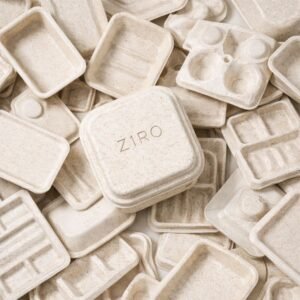
We develop bio-designed molded-fiber packaging from non-wood biomass: leaves, hemp, bamboo, flax and agricultural residues. Our goal is to help brands replace plastic and reduce dependency on virgin wood-based materials while keeping the performance, protection and product experience that packaging still needs to deliver.
Why the packaging industry needs a new material route
The packaging market is under pressure from several directions at once.
Brands need to reduce plastic.
Regulators are pushing packaging toward recyclability and lower waste.
Consumers expect better environmental choices.
Supply chains need materials that can scale.
Product teams still need packaging that protects, fits, looks good and works in real commercial conditions.
This is where many sustainable packaging alternatives face a difficult test. A material can look good in a prototype, but fail on cost. It can be bio-based, but hard to scale. It can be recyclable in theory, but incompatible with existing recycling streams. It can reduce plastic, but create a new dependency on virgin wood pulp.
Z1RO was created to work on this gap: functional molded-fiber packaging from biomass that Europe already has.
What is Z1RO technology?
Z1RO develops molded-fiber packaging using renewable plant-based feedstocks such as fallen leaves, industrial hemp, flax, European bamboo, wheat straw and rice husk.
These materials are processed into molded packaging formats designed for real product categories, including:
- cosmetics inserts
- electronics inserts
- coffee lids
- food trays
- pharma and consumer goods packaging applications
The technology focuses on combining three things that brands usually struggle to get at the same time: material sustainability, functional protection and industrial scalability.
Z1RO’s molded-fiber packaging is designed to be plastic-free, recyclable, compostable, compatible with paper/cardboard recycling streams and suitable for different design and texture requirements. The material can also be developed with barrier-coating compatibility for relevant packaging applications.
From biomass to brand experience
Sustainable packaging should not look like a downgrade.
For many premium brands, packaging is not only a protective layer. It is part of the customer experience. It affects the way a product is opened, photographed, remembered and perceived.
That is why Z1RO works not only with raw materials, but also with textures, formats and product fit. The material system includes different visual and tactile directions, from lighter fiber-based surfaces to deeper natural textures created from leaves, bamboo, hemp hurds and other biomass combinations.
This matters for categories such as cosmetics, electronics and premium consumer goods, where packaging needs to communicate quality as well as responsibility.
What makes Z1RO different from conventional molded-fiber packaging?
Conventional molded-fiber packaging usually relies on wood pulp. Z1RO is developing an alternative route based on non-wood biomass and agricultural residues.
This allows Z1RO to work on several material advantages:
- up to 70% replacement of virgin wood cellulose in the material formulation
- more than 70% CO₂ reduction confirmed by an independent CFP study
- molded-fiber formats compatible with paper/cardboard recycling streams
- plastic-free packaging applications
- natural textures suitable for premium product experience
- potential cost parity with wood pulp and lower cost compared to some other alternative fiber solutions
For brands, this means Z1RO is not only offering a “greener” packaging material. The company is building a molded-fiber packaging system that can match different product needs, sustainability targets and design expectations.
Beyond the lab: industrial trials, tests and patent work
One of the biggest questions in material innovation is whether a product can move beyond the lab.
Z1RO has already completed industrial trials at a factory in the Netherlands. The material has also gone through physic-mechanical tests by a laboratory in France. The company has filed a patent covering the use of non-wood fibers in molded-fiber packaging and signed supply agreements for bamboo and hemp.
These milestones are important because packaging innovation needs to prove itself in real manufacturing conditions, not only in concept visuals or laboratory samples.
Z1RO has also received €50,000 in non-dilutive public funding and has been selected as a finalist of VivaTechnology Challenge 2026, Hello Tomorrow Summit 2026, Future Positive Challenge and Sustainability Award.
Who is Z1RO for?
Z1RO works for brands and packaging partners looking for alternatives to plastic, virgin wood-based molded fiber and expensive alternative fiber solutions.
The main target categories include:
- cosmetics brands that need premium inserts and protective packaging
- electronics brands looking for plastic-free molded inserts
- food and beverage companies exploring molded-fiber trays, lids and food packaging applications
- pharma and consumer goods companies that need scalable packaging with better material logic
- packaging distributors and regional production partners looking for new material technologies
Z1RO’s commercial model includes pilot projects with premium brands and early adopters, long-term contracts for packaging inserts and trays, direct B2B sales, regional packaging distributors and future technology licensing.
Why this matters now
The packaging industry has reached a point where “less plastic” is no longer enough as a strategy. The next question is what materials will replace it, how they will perform and whether they can scale without creating new environmental or supply-chain trade-offs.
Z1RO’s answer is to move beyond the old plastic-versus-paper debate.
By transforming leaves, hemp, bamboo, flax and agricultural residues into molded-fiber packaging, Z1RO is working on a new category of material solutions for the post-plastic packaging market.
The future of packaging will not be defined by one material only. It will be defined by smarter material choices, better feedstocks, stronger design logic and technologies that can work in real industrial conditions.
Meet Z1RO at VivaTech 2026
Z1RO will showcase its bio-designed molded-fiber packaging at VivaTech 2026.
Visitors, journalists, brands and packaging partners will be able to see and touch real material samples, explore different textures and learn how non-wood biomass can become functional packaging for cosmetics, electronics, food, pharma and consumer goods.
If you are looking for what comes after plastic and conventional paper packaging, come meet Z1RO at VivaTech 2026 and discover the material in person.